
Academic Coaching vs Tutoring: Key Differences | GEL
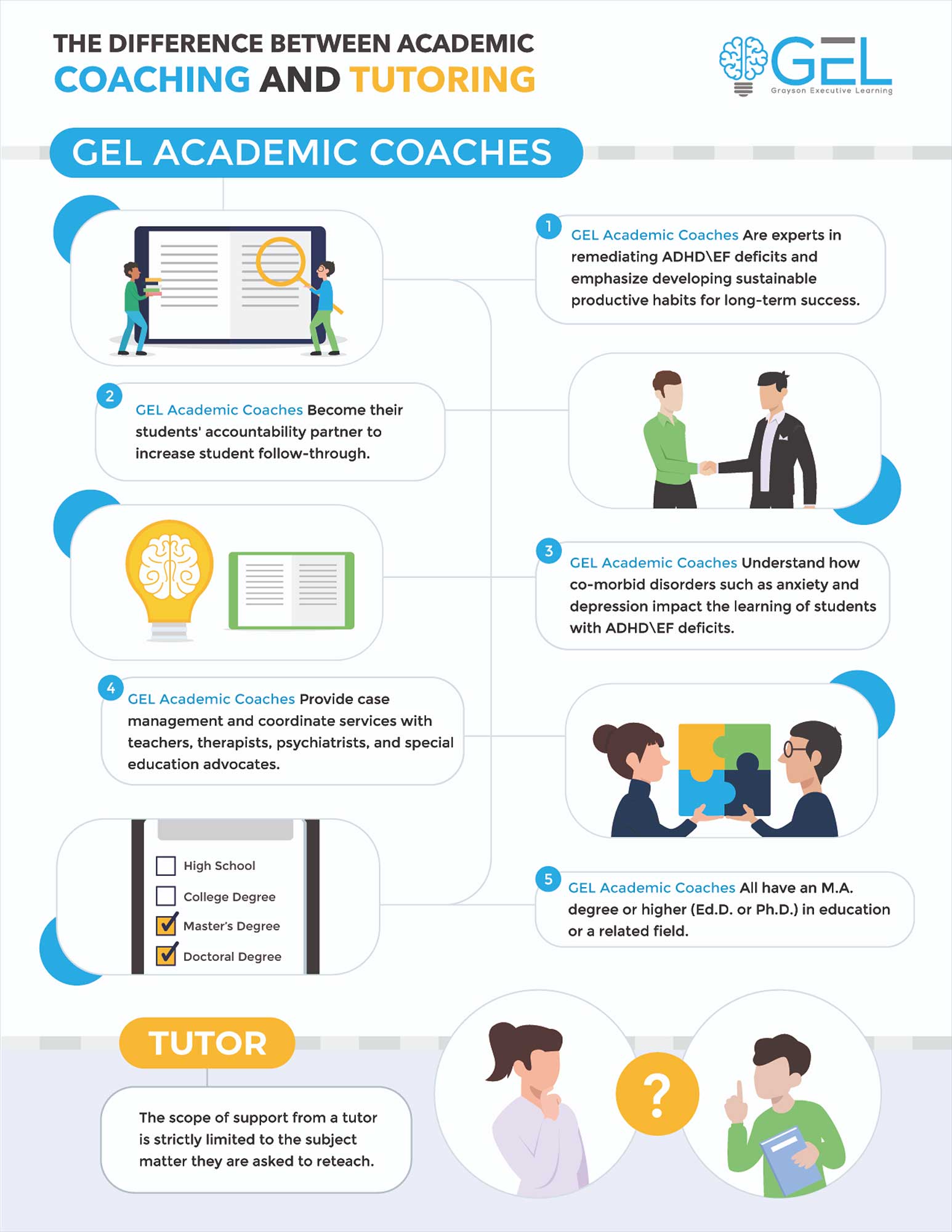
Academic coaching and tutoring are two distinct forms of educational support that aim to enhance students’ learning experiences and improve their academic performance. While they share similarities, they differ in their approaches, goals, and focus.
Tutoring
Tutoring typically involves one-on-one or small group sessions where a tutor provides direct instruction and support in a specific subject or skill. Tutors are often subject matter experts who help students understand difficult concepts, complete assignments, and prepare for exams. The focus is primarily on addressing immediate academic needs and providing targeted assistance in specific subjects.
Academic Coaching
On the other hand, academic coaching takes a more holistic approach to learning. Coaches work with students to develop study skills, organizational strategies, time management techniques, and self-regulation abilities. They focus on building a student’s overall academic competence and independence. It is not limited to specific subjects; rather, it encompasses broader academic goals and personal development.
While tutoring primarily addresses content mastery, academic coaching addresses the underlying factors that contribute to academic success. Coaches help students identify their strengths and weaknesses, set goals, and create personalized plans for achieving those goals. They also foster motivation, resilience, and self-confidence in students, empowering them to take ownership of their learning journey.
Another key distinction is the time frame involved. Tutoring often occurs on a short-term basis, providing immediate support for specific assignments or exams. On the other hand, coaching is more long-term and focuses on building skills and habits that promote sustained academic growth and success.
Both have their merits and can be valuable tools for students. The choice between them depends on the individual student’s needs and goals. Some students may benefit from subject-specific tutoring to overcome immediate challenges, while others may require the broader skill development and support provided by academic coaching.
In conclusion, academic coaching and tutoring are two distinct approaches to educational support. While tutoring addresses immediate academic needs and subject-specific challenges, academic coaching takes a more comprehensive and long-term approach to foster overall academic growth and personal development. Understanding the differences between these two forms of support can help students and parents make informed decisions about the type of assistance that best suits their needs.
Newsletter
Subscribe to our blog

Frequently Asked Questions
Tutoring provides direct help in one subject, like chemistry or algebra, and usually focuses on immediate needs such as an upcoming exam. Academic coaching builds the skills behind every subject: planning, organization, time management, and follow-through. In short, a tutor helps your student master the material, while a coach helps them build a reliable way of working.
Look at where the work breaks down. If your student understands the material but cannot get started, loses track of assignments, or finishes an essay and never submits it, that points to coaching. If they genuinely do not understand the content itself, a tutor is the better starting place. Some students benefit from both at different times.
Yes. Our academic coaching sessions at Grayson Executive Learning happen online, so students in Pearland, TX meet with their coach from home, in any quiet space free of distractions. Remote sessions mean families are not limited by local options, and students keep the same coach through busy seasons and schedule changes.
Yes, though it works differently. Tutoring can lift one subject quickly because it targets specific content. Coaching addresses the habits underneath the grades, such as goal setting, study routines, and self-monitoring, so improvement tends to show up across all classes and hold up over time rather than fading after one exam.
Tutoring is often short term, wrapping up once the exam or difficult unit has passed. Academic coaching runs longer, usually at least a semester, because its goal is lasting behavior change. Building new planning and study habits takes repeated practice, and the payoff is a student who can manage future demands without constant support.